Is My Brown Killeen TX Lawn Dead or Just Dormant? How to Tell
← Browse all Killeen TX lawn care guides
Is My Brown Killeen TX Lawn Dead or Just Dormant? How to Tell
If you are standing in your Killeen TX yard in July or August looking at grass that has turned completely brown and wondering whether it’s dead, the answer is almost certainly: it’s dormant, not dead.
Bermudagrass — which covers the overwhelming majority of residential lawns in Killeen TX — is a warm-season grass with a very specific heat-stress response. When soil temperatures exceed certain thresholds, or when the grass experiences drought stress, it stops actively growing and diverts energy to root protection. The blades turn brown. The lawn looks dead. But the plant is almost certainly still alive.
This guide will walk you through exactly how to tell if your brown lawn Killeen TX yard is dormant or dead — the single most common brown lawn Killeen TX question we get, what caused it to go brown, what to do next, and how to prevent the same problem in future seasons.
Almost every brown Killeen TX lawn in summer or winter is Bermudagrass dormancy — a survival response, not death. The tests below will confirm it in minutes.
Jump to any section of this brown lawn Killeen TX guide:
On This Page
The Two Types of Bermudagrass Dormancy in Killeen TX
Both causes of a brown lawn Killeen TX yard shows are covered below.
Bermudagrass in Killeen TX goes dormant in two distinct situations — and both produce the same brown-lawn result.
Summer Dormancy (Heat Stress) — July and August in Killeen TX
When air temperatures in Killeen TX consistently exceed 95–100°F and soil moisture drops below critical thresholds, Bermudagrass enters heat-stress dormancy. The blades stop producing chlorophyll and turn brown — but the crown, rhizomes (underground runners), and stolons (surface runners) remain alive.
This is the most common reason Killeen TX lawns turn brown in summer. It is not a problem. It is the grass protecting itself from conditions it cannot survive in active growth mode.
Key facts about summer dormancy in Killeen TX:
- Bermuda turns brown when air temps exceed 95°F for extended periods
- The grass is NOT dead — it is in survival mode
- Adequate irrigation can delay or prevent summer dormancy
- Once temperatures drop and water is available, Bermuda recovers on its own
- Do not fertilize dormant Bermuda — it cannot use the nutrients and may be damaged
Dormant grass can’t use the nutrients and fertilizing it can cause damage. Wait until you see active green growth before applying anything.
Winter Dormancy — November Through March in Killeen TX
Bermudagrass also goes dormant in winter when soil temperatures drop below 50–55°F. In Killeen TX, this typically happens in November and the grass stays dormant through February or early March.
Winter dormancy is completely normal and universal for Bermudagrass in Central Texas. A brown Killeen TX lawn from November to March is not a problem — it is exactly what Bermuda is supposed to do in winter.
How to Tell if Your Killeen TX Lawn Is Dormant or Dead
Four quick tests to check whether your brown lawn Killeen TX yard is alive:
The following tests work for Bermudagrass in Killeen TX:
The Tug Test
Pull a small handful of brown blades from the ground. If they resist and require force to pull — the roots are intact. If they come out easily with no resistance and the roots are black, mushy, or rotted — the plant may be dead in that spot.
Dormant Bermuda has a strong, intact root system. Dead grass has no living root tissue holding it in place.
The Stem Crown Test
Part the brown blades and look at the stem crown — the compressed growing point at soil level.
Dormant Bermudagrass
- The crown is white, cream, or light tan
- The tissue is firm, not soft or mushy
- You may see small new growth points that have not emerged yet
Dead Bermudagrass
- The crown is dark brown, black, or grey
- The tissue is soft, mushy, or dry and brittle with no structure
- No new growth points are visible
The Water Test
Dormant Bermuda will often show visible greening within 5–7 days of consistent irrigation if the cause was drought stress rather than temperature-related dormancy. If summer temperatures in Killeen TX have dropped below 95°F and you begin irrigating, watch for any green tint in the crowns within a week.
No response to irrigation after 7–10 days during the right temperature conditions suggests the grass may actually be dead in that area.
The Scratch Test (Stolon Check)
Find a surface stolon (a runner growing on top of the soil). Use a thumbnail to scratch the surface lightly. Dormant stolons have green tissue under the outer layer. Dead stolons are brown or grey all the way through.
Not every brown lawn Killeen TX case is dormancy — here’s what can actually cause death.
What Actually Kills Bermudagrass in Killeen TX (Rather Than Dormancy)
A true brown lawn Killeen TX death (not dormancy) usually traces back to one of these causes.
Understanding what truly kills Bermuda — as opposed to just turning it brown temporarily — helps Killeen TX homeowners identify the real problem.
Drought That Breaks the Dormancy Threshold
Extended drought without any irrigation can take Bermuda from dormancy to death. In Killeen TX summers, if the soil dries completely to a depth of 4+ inches with no moisture for 4–6 weeks and temperatures stay extreme, even dormant plants can die. This is rare with any supplemental irrigation but can happen in severely neglected lawns during Killeen’s most extreme drought periods.
Scalping During Summer
Cutting Bermudagrass too short — below 1.5 inches — during Killeen TX’s 100°F+ summer months is one of the most common causes of genuine lawn death in residential properties. Scalping removes the food-producing blade tissue and exposes the crown directly to heat and sun. The result is a dead crown that cannot recover.
If a lawn mowing in Killeen TX provider scalps your Bermuda in June, July, or August, you may see genuinely dead patches that require overseeding or resodding.
Dollar Weed and Fungal Disease
Brown patches that don’t follow the overall dormancy pattern — irregular brown spots in otherwise green or uniformly-browning grass — may indicate fungal disease or localized problems rather than dormancy. Killeen TX lawns with excessive moisture (overwatering, poor drainage in Blackland clay) are susceptible to brown patch fungal disease on St. Augustine.
Herbicide Damage
If a lawn went brown shortly after a weed control in Killeen TX treatment, the treatment may have been applied in the wrong conditions (too hot, wrong product for the grass type). Check with whoever applied the product.
Grub Damage
White grubs (larvae of various beetle species) feeding on Bermudagrass roots in Killeen TX can produce brown patches that look like drought dormancy but don’t respond to irrigation. If you can lift sections of brown turf like a loose carpet with no resistance — the roots are gone — suspect grub damage.
What to Do With a Brown Killeen TX Lawn in Summer
What to actually do once you’ve confirmed your brown lawn Killeen TX yard is dormant.
If It’s Summer Dormancy (Most Likely)
Continue mowing at the correct height — dormant Bermuda still grows slowly and should be maintained at 2–3 inches. Skipping mowing for months then cutting hard does more damage than regular light maintenance.
Water deeply 1–2 times per week if you want to keep Bermuda from going fully dormant. Bermuda needs about 1 inch of water per week in Killeen TX summer to stay active. Water early morning to reduce evaporation and fungal risk.
Do not fertilize dormant or drought-stressed Bermuda. Wait until the grass shows active growth.
Do not overseed with cool-season grass during summer — it won’t establish in Killeen’s summer heat.
If It’s Winter Dormancy
Nothing. Leave it alone. Do not apply any products to dormant Bermuda in winter. Green-up will begin naturally in March–April when soil temps rise above 65°F in Killeen TX.
If You Suspect Dead Patches (Not Just Dormancy)
Confirming a truly dead spot on your brown lawn Killeen TX yard takes just a few minutes with these steps.
- Perform the tug, crown, and scratch tests above
- Wait for natural green-up conditions in spring (if it’s summer) or the next growing season (if it’s fall/winter)
- If the grass genuinely doesn’t recover once temperatures normalize and water is available, consider spot repairs with Bermuda sod plugs or overseeding with Bermuda seed in May–June in Killeen TX
How to Prevent Brown Lawn Problems in Killeen TX
Four habits that keep a brown lawn Killeen TX yard from happening again.
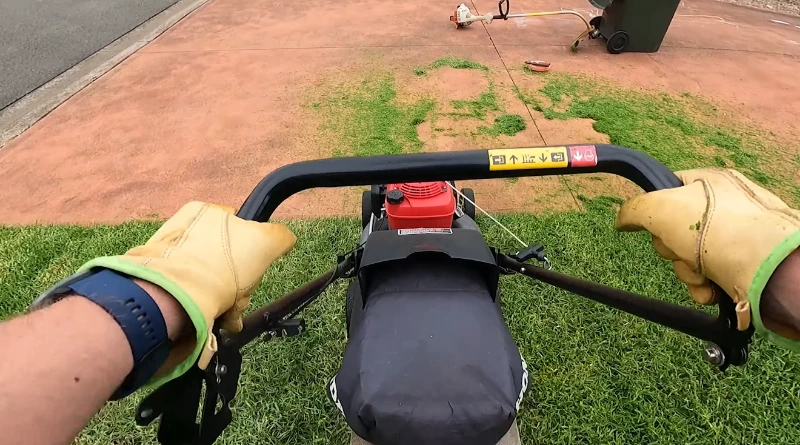
Correct Mowing Height
Never cut Bermudagrass below 1.5 inches in summer. Maintain 2–3 inches during the active growing season in Killeen TX. This protects the crown from heat, reduces water stress, and keeps the canopy shading the soil.
Deep, Infrequent Watering
Shallow daily watering produces shallow roots that are more vulnerable to heat stress. Water Killeen TX Bermuda lawns deeply — 30–45 minutes per zone — 2–3 times per week during summer rather than 10 minutes every day. Deep roots access soil moisture that surface roots miss during drought.
Annual Core Aeration
Killeen TX’s Blackland Prairie clay compacts easily and this compaction reduces water penetration, forcing moisture to run off instead of soaking to root depth. Annual core aeration — best done in August–September in Killeen TX — breaks this cycle and dramatically improves drought resilience.
Proper Fertilization Timing
Fertilizing dormant or drought-stressed Bermuda pushes top growth the plant can’t sustain. Follow the Killeen TX calendar: first application in April after green-up, second in June, third potassium application in August. Never fertilize in July or August heat peaks. Learn more about our lawn fertilization in Killeen TX program.
Frequently Asked Questions — Brown Lawn in Killeen TX
Why does Bermudagrass turn brown in summer in Killeen TX?
Will my brown Killeen TX lawn come back green?
Should I water my brown lawn in Killeen TX?
Should I mow my brown Killeen TX lawn?
How do I know if my brown lawn in Killeen TX is actually dead?
Not sure what’s going on with your yard? Our lawn service in Killeen TX team can take a look.
Not Sure If Your Lawn Is Dormant or Dead?
That covers everything you need to diagnose a brown lawn Killeen TX situation with confidence.
Has your Killeen TX lawn turned brown and you’re not sure if it’s dormant or damaged? Call or text (254) 489-4779 — we can assess your yard and tell you exactly what you’re dealing with.
Killeen Lawn Service — brown lawn Killeen TX guide, updated for 2026
Serving Killeen TX · Harker Heights · Nolanville · Copperas Cove · Bell County · ZIP 76541 76542 76543 76547 76548 76549 76559
Ready for Lawn Service in Killeen TX?
Call or text before 11AM for same-day mowing. Flat pricing $35–$55 per cut — front and back included. No contract. Fort Hood families welcome.