Weed Control Killeen TX — Pre-Emergent, Post-Emergent & Common Weeds
← Browse all Killeen TX lawn care guides
Weed control in Killeen TX is harder than in most other Texas markets because of a specific combination: Blackland Prairie clay soil holds moisture longer after rain, creating conditions where weed seeds germinate fast and establish deep. The Fort Hood area’s intensive residential development has concentrated weed seed banks in yard-to-yard proximity. And Killeen TX’s climate supports both warm-season weeds (crabgrass, nutsedge, dallisgrass) during the summer and cool-season weeds (henbit, chickweed, annual bluegrass) during the winter — creating a year-round weed pressure that requires a scheduled, two-part control program.
This is the complete weed control guide for Killeen TX lawns — covering pre-emergent timing, post-emergent selection, the most common weeds in Killeen TX and how to handle each, and what a full-year program looks like in practice. Browse our Killeen TX lawn care blog for related guides, or visit our weed control service in Killeen TX page.
The Two-Part Weed Control Program for Killeen TX
Effective weed control in Killeen TX requires two separate approaches working together — prevention before germination and elimination after emergence. Relying on only one produces an incomplete result. A lawn that gets post-emergent treatment but no pre-emergent will have constant weed reinfestation. A lawn with excellent pre-emergent timing but no post-emergent follow-up will still struggle with perennial weeds that pre-emergents don’t address.
Part 1: Pre-Emergent Weed Control (Prevention)
Pre-emergent herbicides work by creating a chemical barrier in the top layer of soil that prevents germinating weed seeds from completing root development. They do not kill established weeds — they prevent new weeds from sprouting. Timing is everything. Applied too early, the product degrades before peak germination. Applied too late, weeds have already germinated and the application is ineffective.
Spring pre-emergent in Killeen TX — late February:
Apply before soil temperatures reach 55°F consistently — typically late February in Killeen TX. This application prevents:
- Crabgrass (most common warm-season annual weed in Killeen TX)
- Goosegrass (similar to crabgrass, slightly later germination)
- Annual grassy weeds that would otherwise establish in March–April alongside Bermudagrass green-up
The late February pre-emergent window is the single most important timing point in the Killeen TX weed control calendar. Miss it and you spend the entire spring and summer managing weeds that a $20 pre-emergent bag would have prevented.
Fall pre-emergent in Killeen TX — late August:
Apply before soil temperatures drop below 70°F — typically late August in Killeen TX. This application prevents:
- Henbit (the most visible winter weed in Killeen TX — produces purple flowers in early spring)
- Chickweed (spreads rapidly in overwatered Killeen TX lawns)
- Annual bluegrass (poa annua) — a grassy weed that creates light-colored patches in otherwise green turf
- Other cool-season annual weeds that germinate as soil temperatures cool in September–October
Common pre-emergent products used in Killeen TX Bermudagrass lawns: prodiamine (Barricade), pendimethalin (Pendulum), and dithiopyr (Dimension). All three are safe for established Bermudagrass. Do not apply pre-emergent if you plan to overseed within 4–8 weeks — pre-emergents prevent desirable grass seed germination just as effectively as weed seed germination.
Part 2: Post-Emergent Weed Control (Elimination)
Post-emergent herbicides kill weeds that have already germinated and are actively growing. Product selection must be matched to the specific weed type — a product that kills broadleaf weeds has little effect on grassy weeds, and vice versa.
Broadleaf weed control in Killeen TX Bermudagrass: Products containing 2,4-D, MCPP, dicamba, or triclopyr are effective on dandelion, clover, dollarweed, spurge, and other broadleaf weeds. These products are selective — they target broadleaf plants without harming established Bermudagrass at labeled rates. Do not apply during extreme heat (above 90°F) or when Bermudagrass is heat-stressed.
Grassy weed control in Killeen TX: Significantly more challenging. Many grassy weeds (dallisgrass, quackgrass) have no safe selective herbicide that eliminates them without harming Bermudagrass. The most effective approach is combination of pre-emergent prevention and physical spot-removal for established plants.
The Most Common Weeds in Killeen TX Lawns
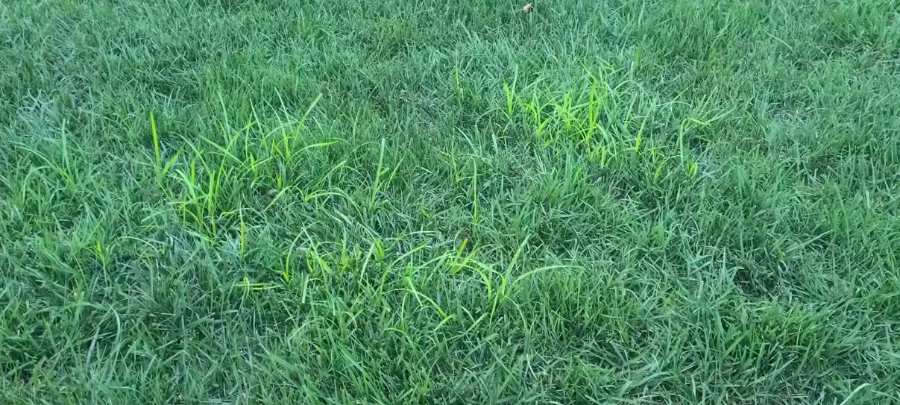
Dallisgrass (Paspalum dilatatum)
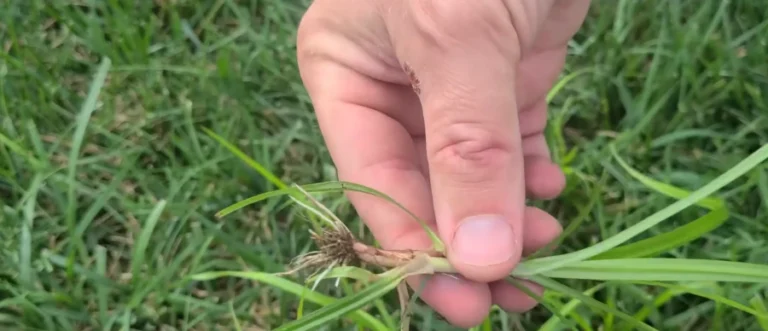
The most problematic weed in Killeen TX Bermudagrass. Dallisgrass is a coarse, clumping perennial grass weed with a distinctive dark seed head on long spikes. It grows faster than surrounding Bermuda, creating visible lighter-colored clumps throughout the lawn. No selective herbicide reliably eliminates established dallisgrass without damaging Bermudagrass at safe rates. Control approaches: pre-emergent timing for young plants, physical removal of small clumps (including roots), spot treatment with non-selective herbicide on isolated clumps followed by plugging. See our dallisgrass vs crabgrass identification guide for Killeen TX.
Nutsedge / Nutgrass (Cyperus species)
The second most common weed complaint in Killeen TX lawns after dallisgrass. Nutsedge is a sedge — not a grass — with triangular stems (roll between fingers to feel three sides), bright yellow-green color, and growth rate that visibly exceeds surrounding Bermudagrass after mowing. Killeen TX’s clay soil retains moisture that nutsedge prefers, making it nearly universal in irrigated Killeen TX yards. Control: halosulfuron-methyl (Sedgehammer) is the most effective product available. Standard herbicides have minimal effect. See our complete nutsedge guide for Killeen TX.
Crabgrass (Digitaria species)
An annual warm-season grass weed that germinates in spring when soil temperatures reach 55°F. Crabgrass produces wide, star-shaped low-growing clumps that are highly visible in Bermudagrass. February pre-emergent application is the most effective and economical control. Post-emergent products containing fluazifop or quizalofop work on young crabgrass but have limited effect on established plants. See our guide on identifying crabgrass vs dallisgrass in Killeen TX.
Henbit (Lamium amplexicaule)
A cool-season annual broadleaf weed that germinates in fall, overwinters as a low rosette, and becomes highly visible in early spring when it produces purple flowers. Henbit is one of the most common winter weeds in Killeen TX — it turns lawns noticeably purple in February and March. Fall pre-emergent (late August application) is the most effective prevention. Post-emergent broadleaf herbicides control established henbit when applied before heavy seed set.
Dollarweed / Pennywort (Hydrocotyle species)
A broadleaf weed with distinctive round, shiny leaves that resembles small lily pads. Dollarweed thrives in overwatered Killeen TX lawns — consistently wet clay soil creates ideal conditions. The first step in dollarweed control is correcting the watering issue. Reduce to deep, infrequent irrigation. Post-emergent control: products containing 2,4-D or atrazine provide good control. Persistent infestations usually indicate consistent overwatering rather than herbicide resistance.
Annual Bluegrass / Poa Annua (Poa annua)
A cool-season annual grassy weed that produces light-green patches with distinctive white seed heads in Killeen TX lawns from late fall through early spring. Highly visible against dormant brown Bermudagrass in winter. Prevention: fall pre-emergent (August application, pendimethalin or prodiamine). Post-emergent control of established poa annua in Bermudagrass is difficult — most products that kill poa annua also damage Bermuda.
Weed Control and Bermudagrass Health
The best long-term weed control in a Killeen TX Bermudagrass lawn is not herbicide — it’s a thick, healthy canopy. Dense Bermudagrass physically prevents weed seeds from reaching soil surface, shades out seedlings that do germinate, and outcompetes young weeds for moisture and nutrients. A healthy Bermudagrass lawn achieves weed suppression through the lawn itself.
The practices that maximize Bermudagrass density — and therefore weed suppression — in Killeen TX:
- Correct mowing height (2–3 inches): A tall Bermuda canopy shades soil, preventing light from reaching weed seeds. Scalped Bermuda opens the soil surface to weed germination. See our Bermudagrass mowing guide for Killeen TX.
- Annual core aeration: Compacted Killeen TX clay creates thin, weak turf that can’t compete with weeds. Annual aeration thickens the lawn by improving root development. See our core aeration guide for Killeen TX.
- Timely fertilization: Underfertilized Bermudagrass in Killeen TX is thin and pale — giving weeds the light and space they need to establish. See our Bermudagrass fertilization guide for Killeen TX.
- Correct watering: Deep, infrequent irrigation encourages deep roots and discourages shallow-rooted weeds (especially dollarweed). Overwatering creates conditions weeds prefer over Bermudagrass. See our Killeen TX watering schedule.
Full-Year Weed Control Calendar for Killeen TX
| Month | Weed Control Task | Target Weeds |
|---|---|---|
| January–February | Monitor for winter broadleaves | Henbit, chickweed (post-emergent if needed) |
| Late February | Apply spring pre-emergent | Crabgrass, goosegrass, annual grassy weeds |
| March–April | Spot-treat emerging weeds | Broadleaf weeds, young dallisgrass |
| April–May | Nutsedge watch — apply Sedgehammer | Nutsedge (best when plants are young, 2–4 leaves) |
| June–July | Spot-treat as needed, avoid in extreme heat | Broadleaf weeds; delay above 90°F |
| Late August | Apply fall pre-emergent | Henbit, chickweed, poa annua |
| September | Post-emergent for any summer survivors | Broadleaf weeds while temperatures allow |
| October–December | Monitor — pre-emergent in place | Watch for gaps in coverage |
For the complete month-by-month schedule including all lawn care tasks alongside weed control, see our Killeen TX lawn care calendar for 2026.
Frequently Asked Questions — Weed Control Killeen TX
When should I apply pre-emergent in Killeen TX?
Late February (before soil temperatures reach 55°F consistently) for spring weeds, and late August (before soil temperatures drop below 70°F) for winter weeds. These two applications are the foundation of a complete weed control program for any Killeen TX lawn.
What kills dallisgrass in a Killeen TX lawn?
No selective herbicide reliably eliminates established dallisgrass without damaging Bermudagrass. Control approaches: pre-emergent timing to prevent establishment, physical removal of young clumps, and spot application of non-selective herbicide (glyphosate) on isolated patches followed by plugging with Bermuda. See our detailed dallisgrass guide for Killeen TX.
What kills nutsedge in Bermudagrass without harming the lawn?
Halosulfuron-methyl (brand name Sedgehammer) is selective for sedge control and safe for established Bermudagrass at labeled rates. Apply when nutsedge is actively growing (May–August in Killeen TX) and plants are young. Add a surfactant to improve absorption through nutsedge’s waxy leaves. Two applications 6–10 weeks apart typically needed for complete control. See our complete nutsedge control guide for Killeen TX.
Can I apply pre-emergent and fertilizer at the same time in Killeen TX?
Yes — many “weed and feed” products combine a pre-emergent herbicide with fertilizer. The limitation: some pre-emergents restrict overseeding for 4–8 weeks after application. Apply the February pre-emergent at the same time as or just before your first fertilization round in late March if using separate products. Read label restrictions before combining products.
My Killeen TX lawn has weeds every year despite treatment — why?
The most common causes of recurring weed problems despite treatment: (1) missing one of the two pre-emergent windows — even a two-week delay on the February application allows crabgrass to germinate before the barrier is in place; (2) thin, weak Bermudagrass canopy from scalping, compaction, or under-fertilization — weeds establish in open turf; (3) weed seed bank — years of established weed seed in Killeen TX clay soil continues producing new weeds; (4) neighboring untreated properties continuously introducing new seed.
Need professional weed control for your Killeen TX lawn? Our weed control service in Killeen TX applies pre-emergent and post-emergent treatments on the correct schedule. Call (254) 489-4779. Browse our lawn care blog for more Killeen TX lawn guides.
Serving Killeen TX · Harker Heights · Nolanville · Copperas Cove · Bell County · ZIP 76541 76542 76543 76547 76548 76549
Ready for Lawn Service in Killeen TX?
Call or text before 11AM for same-day mowing. Flat pricing $35–$55 per cut — front and back included. No contract. Fort Hood families welcome.