Dallisgrass vs Crabgrass Killeen TX — Tell the Difference & Kill Both
← Browse all Killeen TX lawn care guides
Dallisgrass vs Crabgrass Killeen TX — Tell the Difference & Kill Both
If your Killeen TX lawn has thick, ugly clumps of coarse grass growing faster than everything else around them — you are dealing with either dallisgrass or crabgrass. They look similar to the untrained eye, they both ruin the appearance of a well-maintained Bermudagrass lawn, and they are both extremely common in Bell County. But they are completely different plants that require completely different treatment.
Use the wrong herbicide for the weed you have and you waste money, damage your lawn, and the weed comes back stronger next season.
This guide will help you identify exactly which weed you have in your Killeen TX lawn — and tell you exactly what to do about it.
Using the wrong herbicide wastes money, can damage your Bermudagrass, and lets the weed come back stronger. Correct identification comes first.
On This Page
Why Weed Identification Matters in Killeen TX
Understanding dallisgrass Killeen TX conditions starts with the soil itself.
Killeen TX sits on Blackland Prairie clay — one of the most weed-permissive soil environments in Central Texas. The combination of heavy clay, high summer heat, aggressive irrigation schedules, and the high residential turnover rate around Fort Hood (lawns frequently going unmaintained during PCS transitions) creates ideal conditions for both dallisgrass and crabgrass to establish and spread rapidly.
Three weeds account for the majority of serious lawn damage in Killeen TX residential properties:
- Dallisgrass — perennial, impossible to control by mowing, requires specific post-emergent herbicide
- Crabgrass — annual, controlled primarily through pre-emergent timing
- Nutsedge (nutgrass) — sedge species, not a true grass, requires sedge-specific chemistry
This guide focuses on dallisgrass vs. crabgrass — the two most commonly confused. Nutsedge identification and treatment is covered separately.
Correctly spotting dallisgrass Killeen TX yards get is the first step to killing it.
How to Identify Dallisgrass in Killeen TX
What Dallisgrass Looks Like
Dallisgrass (Paspalum dilatatum) is a perennial warm-season grass weed. Key visual characteristics:
- Growth habit: Coarse, clumping growth in circular patches that expand outward each season. Patches are noticeably darker and coarser than surrounding Bermudagrass.
- Blade width: Wider and coarser than Bermudagrass blades — roughly 6–12mm wide with a prominent midrib
- Color: Medium green, slightly darker than Bermuda
- Seed head: Distinctive star-shaped seed head with 3–5 finger-like racemes arranged alternately along a central stem. The seed heads are held high above the canopy — highly visible. Seeds have a characteristic dark brown-black, hairy appearance.
- Growth rate: Grows significantly faster than Bermudagrass in summer — even after mowing, dallisgrass patches are visibly taller than the surrounding lawn within 3–4 days
- Root system: Deep, fibrous root system with thick underground rhizomes that regenerate even if the top is removed
- Spread pattern: Radial clumps that expand outward 6–12 inches per season. Multiple clumps may merge into large patches over 2–3 seasons if untreated.
Where Dallisgrass Establishes in Killeen TX
Dallisgrass thrives in Killeen TX’s Blackland Prairie clay soil and is especially common:
- Along fence lines and property edges
- In areas with irrigation runoff or consistently moist soil
- In thinned or stressed Bermudagrass (scalped areas, high-traffic paths)
- Along sidewalk and driveway borders where soil disturbance occurred
The Dallisgrass Test
If you’re unsure whether a clump is dallisgrass or Bermuda, check for: (1) wider blade than surrounding Bermuda, (2) the distinctive alternating seed head racemes if present, (3) the circular expanding growth pattern. Dallisgrass does not spread via stolons like Bermuda — it expands as a circular clump, not as runners.
Now that you know dallisgrass Killeen TX identification, here’s the lookalike weed to rule out.
How to Identify Crabgrass in Killeen TX
What Crabgrass Looks Like
Crabgrass (Digitaria species — primarily large crabgrass and smooth crabgrass in Killeen TX) is an annual warm-season grass weed. Key visual characteristics:
- Growth habit: Low, spreading, mat-like growth that radiates outward from a central point — resembling crab legs (hence the name)
- Blade width: Similar to or slightly narrower than dallisgrass — 3–8mm wide, but softer in texture
- Color: Light green to yellow-green — noticeably lighter than both Bermudagrass and dallisgrass
- Seed head: Finger-like seed heads, but arranged in a distinct whorl or fan pattern at the tip (unlike dallisgrass’s alternating arrangement)
- Growth rate: Fast in summer, especially in thin or bare spots
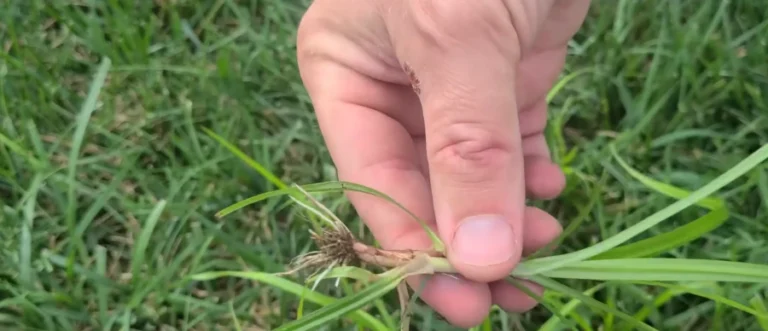
- Root system: Shallow root system — annual plants don’t have the deep perennial root system of dallisgrass. You can often pull crabgrass out by hand when it’s young.
- Life cycle: Annual — germinates from seed each spring when soil temps reach 55–60°F (late February to March in Killeen TX), grows aggressively through summer, produces seeds, then dies with the first frost
Where Crabgrass Establishes in Killeen TX
Crabgrass in Killeen TX is especially prevalent:
- In thin or bare areas of Bermudagrass (scalped spots, high-wear paths, areas recovering from drought)
- Along sidewalk and driveway edges where soil is warmer and competition from Bermuda is weaker
- In new construction or recently disturbed soil where weed competition is low
- Wherever a previous year’s crabgrass patch went to seed
A side-by-side look at dallisgrass Killeen TX yards versus crabgrass:
Dallisgrass vs Crabgrass — Side-by-Side Comparison
| Characteristic | Dallisgrass | Crabgrass |
|---|---|---|
| Life cycle | Perennial (returns every year) | Annual (dies in winter, reseeds) |
| Blade width | Wide, 6–12mm, coarse | Medium, 3–8mm, softer |
| Color | Medium to dark green | Light green to yellow-green |
| Growth pattern | Circular expanding clumps | Low, mat-like, radiating arms |
| Seed head | Alternating finger racemes on tall stem | Fan/whorl arrangement at tip |
| Root system | Deep, fibrous, rhizomes | Shallow, annual |
| Spreads by | Seeds + expanding clump | Seeds only |
| Germinates | Spring (already in soil from previous year) | Spring when soil temp hits 55–60°F |
| Pull-out test | Strong root resistance, won’t pull cleanly | Pulls up relatively easily when young |
| Treatment approach | Post-emergent (repeated) | Pre-emergent (timing critical) |
| Common Killeen TX locations | Along fences, moist areas, radial clumps | Thin/bare spots, edges, disturbed soil |
How to Kill Dallisgrass in Killeen TX
The real treatment plan for dallisgrass Killeen TX lawns need — no shortcuts.
Dallisgrass is the most difficult common weed to control in Killeen TX lawns. Because it is a perennial with deep roots and rhizomes, pulling it only stimulates regrowth. Mowing it removes the seed heads temporarily but the plant returns immediately.
Post-Emergent Herbicide — The Only Effective Treatment
The only effective control for established dallisgrass in Killeen TX Bermudagrass lawns is repeat applications of selective post-emergent herbicide. The two most commonly used products:
MSMA (monosodium acid methanearsonate): Historically the most effective dallisgrass killer in warm-season lawns. Note: MSMA use is restricted in some applications — confirm current registration status in Texas before using or hiring an applicator who uses it.
Glyphosate spot treatment: Non-selective — kills Bermudagrass too. Only viable for isolated clumps where you’re willing to accept dead spots and then re-sod or re-seed the area.
Selective sedge/dallisgrass products: Products containing halosulfuron or similar chemistry can provide control, but dallisgrass response is variable.
Realistic Dallisgrass Treatment Timeline in Killeen TX
- Application 1: Target actively growing dallisgrass in April–May. Do not apply when temps exceed 90°F (product stress risk to Bermuda).
- Applications 2–3: Follow-up treatments every 3–4 weeks through the growing season.
- Expected result: Significant decline after 3–5 applications over a full season. Complete control may require 2 seasons of consistent treatment.
Anyone who tells you otherwise is not being honest about what this weed requires in Killeen TX.
Prevention — Thicken Your Bermudagrass
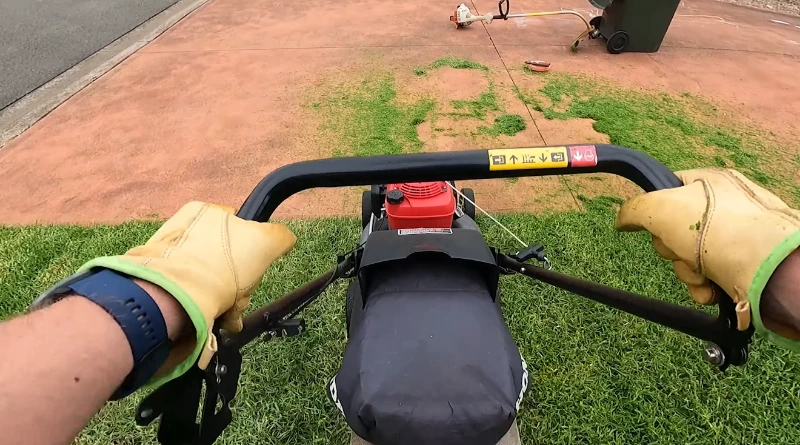
The best long-term defense against dallisgrass in Killeen TX is a dense Bermudagrass canopy. Thin, scalped, or nutrient-deficient Bermuda gives dallisgrass the light and space it needs to establish. Proper mowing height (2–3 inches, never scalped in summer), annual fertilization, and core aeration to address Blackland Prairie clay compaction all contribute to a canopy thick enough to crowd out new dallisgrass germination. A consistent lawn mowing service in Killeen TX is the foundation of that defense.
Crabgrass differs from dallisgrass Killeen TX treatment in one key way: timing.
How to Kill Crabgrass in Killeen TX
Crabgrass control in Killeen TX is primarily a timing problem, not a product problem.
Pre-Emergent Herbicide — The Primary Tool
Because crabgrass is an annual that germinates from seed each spring, preventing germination is far more effective than treating established plants. Pre-emergent herbicide creates a chemical barrier in the top 1–2 inches of soil that prevents crabgrass seeds from completing germination.
Timing in Killeen TX: Apply pre-emergent when soil temperatures at 2-inch depth consistently reach 55°F — this is the crabgrass germination trigger. In Killeen TX, this typically occurs in late February to early March. A weather-based soil temperature tracking tool (Texas A&M AgriLife Extension provides soil temp data for Bell County) takes the guesswork out.
Pre-emergent applied too late (after crabgrass has already germinated) does nothing to established plants. Timing is everything.
Second application: A second pre-emergent application in May extends the barrier through the full crabgrass germination window.
Post-Emergent for Established Crabgrass
If crabgrass is already growing in your Killeen TX lawn:
- When small (2–4 tillers): Products containing quinclorac or fenoxaprop-p-ethyl provide good control on young plants
- When large/mature: Control becomes much more difficult. Focus on preventing it from seeding for next year.
- September/October: As annual crabgrass begins to die with cooling temperatures, it will decline on its own. Focus on thickening Bermuda through fertilization and aeration to reduce bare soil where crabgrass seeds will germinate next spring.
Regular lawn fertilization in Killeen TX keeps the Bermuda canopy dense enough to leave crabgrass little room to establish.
Nutsedge in Killeen TX — The Third Common Culprit
Since nutsedge is frequently confused with both dallisgrass and crabgrass, here is the quick identification guide:
- Nutsedge is NOT a grass — it is a sedge (Cyperus species). It has a triangular stem cross-section (grass stems are round or flat).
- Leaves: Bright yellow-green (yellow nutsedge) or dark green (purple nutsedge), V-shaped cross section, with a prominent ridge on the underside
- Growth: Grows in tight clusters, often faster than surrounding grass immediately after mowing
- Reproduction: Underground tubers called “nutlets” — pulling nutsedge out stimulates nutlet production and makes it worse
- Treatment: Requires sedge-specific chemistry (halosulfuron-methyl, sulfentrazone, or imazaquin products). Do not use standard grass weed killers.
Common questions about dallisgrass Killeen TX homeowners ask, answered:
Frequently Asked Questions — Dallisgrass and Crabgrass in Killeen TX
How do I know if I have dallisgrass or crabgrass in my Killeen TX lawn?
Can mowing control dallisgrass in Killeen TX?
When should I apply pre-emergent for crabgrass in Killeen TX?
Will dallisgrass come back after treatment in Killeen TX?
Is nutsedge the same as dallisgrass in Killeen TX?
That’s everything you need to identify and treat dallisgrass Killeen TX yards deal with — plus its two most common lookalikes.
Not sure what’s growing in your yard? Our lawn service in Killeen TX team can identify it on-site. If fire ants are also a problem in your yard, see our guide to fire ants in your Killeen TX lawn.
Dealing With Dallisgrass, Crabgrass, or Nutsedge?
Dealing with dallisgrass, crabgrass, or nutsedge in your Killeen TX lawn? Our weed control service in Killeen TX uses treatments timed to Central Texas soil temperatures. Call (254) 489-4779.
Killeen Lawn Service — dallisgrass Killeen TX identification and treatment guide, 2026
Serving Killeen TX · Harker Heights · Nolanville · Copperas Cove · Bell County · ZIP 76541 76542 76543 76547 76548 76549 76559
Ready for Lawn Service in Killeen TX?
Call or text before 11AM for same-day mowing. Flat pricing $35–$55 per cut — front and back included. No contract. Fort Hood families welcome.