Nutsedge in Killeen TX — How to Identify It and What Actually Kills It
← Browse all Killeen TX lawn care guides
Nutsedge — commonly called nutgrass in Killeen TX — is the weed that makes homeowners feel like they’re losing their mind. You pull it out and it comes back stronger. You mow it down and it grows back faster than the surrounding grass. You spray it with a general weed killer and it barely flinches.
That’s because nutsedge is not a grass. It is not a broadleaf weed. It is a sedge — a completely different plant category that requires specific chemistry and a realistic timeline to control in Killeen TX’s warm, clay-heavy conditions.
This guide covers everything: how to identify nutsedge vs. grass in your Killeen TX lawn, why common control methods fail, what actually works, and what timeline to expect. For other common lawn weeds in the area, see our guide on dallisgrass and crabgrass in Killeen TX. If you’d rather leave it to a pro, our weed control service in Killeen TX handles sedge-specific treatments timed to Central Texas conditions.
What Is Nutsedge and Why Is It So Common in Killeen TX?
Nutsedge (Cyperus species) is a perennial sedge plant that thrives in Killeen TX for specific reasons:
Warm temperatures: Nutsedge grows aggressively in warm soil — it actively grows in Killeen TX from April through October, often faster than surrounding Bermudagrass especially after mowing.
Moisture-loving in clay: Killeen TX’s Blackland Prairie clay holds moisture longer than sandy soils after rain or irrigation. Areas with slightly poor drainage — common in compacted Killeen clay — create ideal nutsedge conditions. Properties with irrigation systems that overwater specific zones are consistently nutsedge hotspots.
Reproduction by tubers: This is what makes nutsedge so persistent. Underground tubers called “nutlets” are the primary reproduction mechanism. A single plant can produce dozens of nutlets in a single season. When you pull a nutsedge plant out of your Killeen TX lawn by hand, you typically break the stem from the nutlets — which remain in the soil and sprout 2–4 new plants in response. Pulling nutsedge makes it worse.
Two species in Killeen TX: Yellow nutsedge (Cyperus esculentus) and purple nutsedge (Cyperus rotundus) are both present in Killeen TX lawns. Yellow nutsedge is more common in irrigated Killeen TX yards; purple nutsedge is more aggressive and harder to control.
How to Identify Nutsedge in Your Killeen TX Lawn
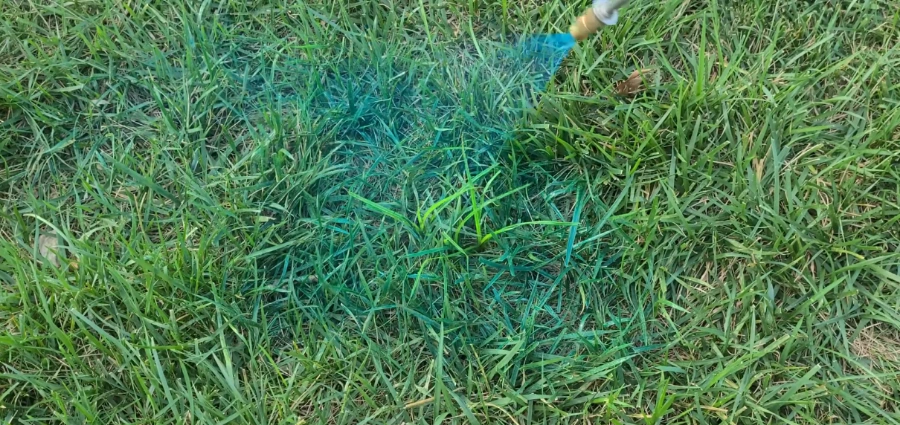
Nutsedge is frequently confused with dallisgrass and crabgrass in Killeen TX lawns. The identification method is simple and definitive:
The Triangle Stem Test
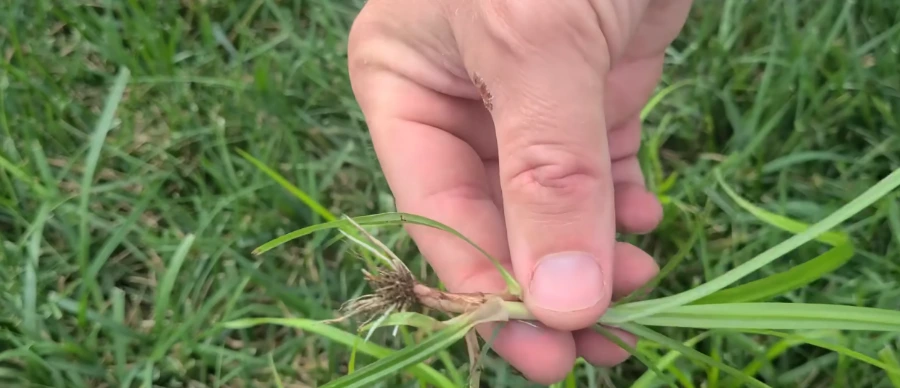
Pick a nutsedge stem and roll it between your fingers.
Nutsedge: The stem is triangular in cross-section — you can feel three distinct sides and edges. The saying “sedges have edges” is the easiest memory aid. Grass stems are round or flat but not triangular.
This test is definitive. If the stem has three sides, you have nutsedge (or another sedge). If it’s round or flat, it’s a grass species (Bermuda, dallisgrass, or crabgrass).
Visual Identification
Yellow nutsedge in Killeen TX:
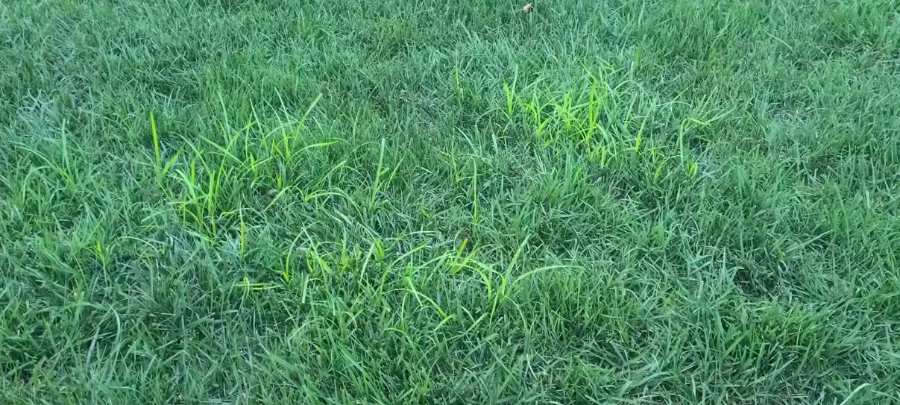
- Bright yellow-green color — significantly lighter than surrounding Bermudagrass
- Grows noticeably taller and faster than Bermuda after mowing — within 3–4 days of a cut, nutsedge is clearly visible above the turf line
- Leaves have a V-shape cross-section and a pale midrib on the underside
- Seed head (if present): golden-yellow, arranged in a flat-topped umbrella pattern at the top of a tall stem
- Underground: white or pale tubers connected by thin underground rhizomes
Purple nutsedge in Killeen TX:
- Darker green than yellow nutsedge
- Leaves are darker with a more prominent midrib
- Seed head: reddish-brown or purple-tinged
- Underground: dark brown tubers in chains connected by rhizomes — much more extensive underground network than yellow nutsedge
Growth Patterns That Indicate Nutsedge
- Bright patches of faster-growing, lighter-colored grass-like plants after mowing
- Plants growing in clusters or patches, often expanding from a central point
- Consistent regrowth in the same location year after year despite repeated mowing
- Areas near irrigation heads, low spots in the yard, or drainage areas
Why Common Nutsedge Control Methods Fail in Killeen TX
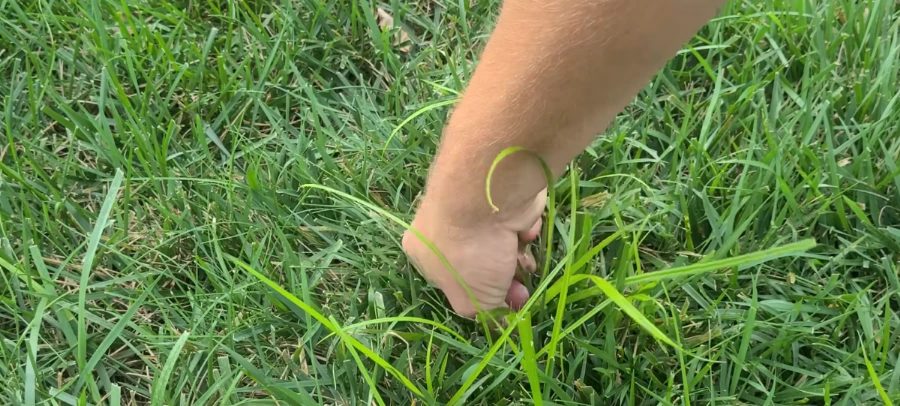
Why Pulling Nutsedge by Hand Doesn’t Work
Pulling nutsedge from Killeen TX clay soil almost always leaves the nutlets underground. The stem breaks cleanly from the tuber system at or below soil level. Each broken stem triggers the plant’s defense mechanism — the connected nutlets produce 2–4 replacement plants. After a season of hand-pulling in a Killeen TX yard, the nutsedge population is often larger than before the pulling started.
Why Mowing Doesn’t Control Nutsedge
Mowing removes the top growth temporarily but has zero effect on the underground tuber system. Nutsedge regrows from nutlets at the same rate regardless of mowing frequency. The only visible effect is that mowing keeps nutsedge from producing seed heads — which does reduce future spread somewhat, but does not address the existing population.
Why Roundup (Glyphosate) Doesn’t Work Well on Nutsedge
Glyphosate (Roundup) provides limited, inconsistent control on nutsedge. The waxy leaf surface of nutsedge resists absorption of glyphosate. Even when some foliar damage occurs, the underground tuber network survives in Killeen TX clay and regenerates the plant within weeks.
Why Standard Broadleaf Weed Killers Don’t Work
Products containing 2,4-D, MCPP, or dicamba — common in “weed and feed” products and standard lawn weed killers — are effective on broadleaf weeds but have very limited activity on sedges. Applying these products to nutsedge in a Killeen TX lawn produces minimal control.
What Actually Controls Nutsedge in Killeen TX Lawns
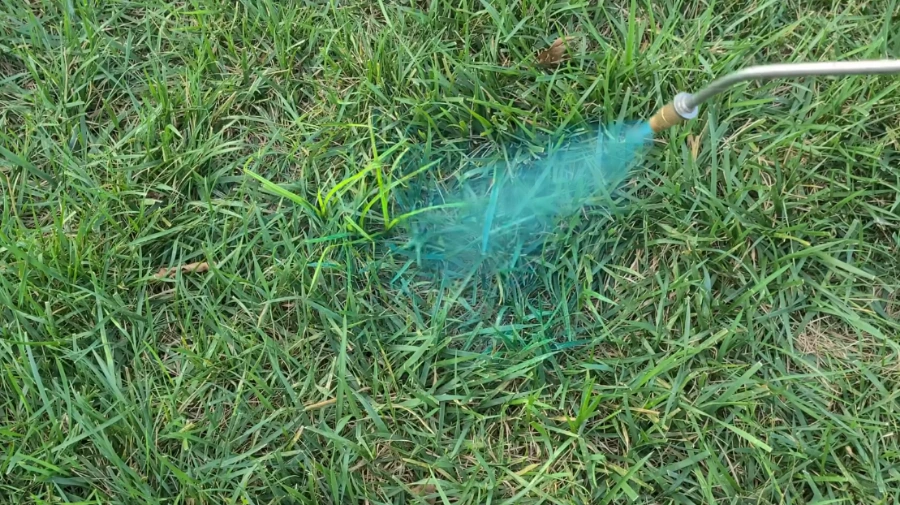
Sedge-Specific Herbicides — The Only Reliable Tool
Nutsedge in Killeen TX Bermudagrass lawns requires herbicides specifically labeled for sedge control. The primary active ingredients that work:
Halosulfuron-methyl (product name: Sedgehammer, SedgeHammer+): The most commonly available sedge-specific herbicide for homeowner and professional use in Killeen TX. Absorbed through foliage and transported to the root and tuber system. Safe for use over Bermudagrass.
Timing of application in Killeen TX:
- Apply when nutsedge is actively growing — May through August in Killeen TX
- Young, small nutsedge plants (2–4 leaves) are significantly easier to control than large, established plants
- Apply in the morning when temperatures are below 90°F — extreme heat reduces herbicide uptake
- Add a labeled surfactant (spreader-sticker) to improve absorption through nutsedge’s waxy leaf surface
- Do not mow for 2–3 days before or after application — leaf surface area must be present for absorption
Repeat applications: A single application rarely eliminates an established nutsedge population in Killeen TX clay soil. A second application 6–10 weeks later is typically needed to address plants that were small or dormant during the first treatment. Some infestations require treatment for 2 full seasons.
Imazaquin (product name: Image): Another sedge-specific option with soil activity — it can prevent nutlet germination in addition to controlling existing plants. Longer soil residual than halosulfuron. Note: imazaquin has restrictions on use near certain ornamentals and trees — read the label carefully for Killeen TX conditions.
Drainage Improvement — Address the Root Cause
Nutsedge consistently returns to specific spots in Killeen TX lawns because those spots have conditions nutsedge prefers — excess moisture from poor drainage or irrigation patterns. Addressing the drainage issue (through core aeration to improve infiltration, irrigation schedule adjustment, or grading) removes the advantage nutsedge has over Bermudagrass in those locations.
Thickening Bermudagrass — The Long-Term Defense
A dense, healthy Bermudagrass canopy is the best long-term defense against nutsedge reestablishment in Killeen TX. Thin or open turf — from scalping, drought stress, compaction, or inadequate fertilization — gives nutsedge the light and space it needs to establish. Proper mowing height (never scalping), annual core aeration for Killeen’s Blackland clay, and timely fertilization service in Killeen TX all contribute to a canopy thick enough to crowd out nutsedge reestablishment after treatment.
Frequently Asked Questions — Nutsedge in Killeen TX
What is the difference between nutsedge and grass in a Killeen TX lawn?
Nutsedge is a sedge, not a grass. The definitive identifier: nutsedge stems are triangular in cross-section — roll the stem between your fingers and feel three sides. Grass stems are round or flat. Nutsedge also grows faster than surrounding Bermudagrass after mowing, is brighter yellow-green, and has a V-shaped leaf cross-section.
Will pulling nutsedge out of my Killeen TX lawn fix the problem?
No — pulling nutsedge makes it worse. When the stem breaks at soil level, the underground nutlets produce 2–4 replacement plants. After a season of pulling, nutsedge populations typically increase. The only effective control in Killeen TX is sedge-specific herbicide applied while plants are actively growing.
What kills nutsedge in Bermudagrass in Killeen TX?
Halosulfuron-methyl (Sedgehammer) is the most effective and widely available product for nutsedge control in Killeen TX Bermudagrass lawns. Apply when nutsedge is actively growing (May–August), with a surfactant added to improve absorption. Repeat in 6–10 weeks for complete control.
How long does nutsedge control take in Killeen TX?
With sedge-specific herbicide applications, expect visible decline in nutsedge within 2–4 weeks of the first application. Complete elimination of an established population typically requires 2 applications per season and may require treatment for 2 consecutive seasons in heavily infested Killeen TX lawns.
Why does nutsedge keep coming back in the same spots in my Killeen TX yard?
Persistent regrowth in the same location usually indicates: (1) untreated nutlets remaining in the soil after previous treatments, (2) moisture-favorable conditions in that area (poor drainage, overwatering) that give nutsedge a competitive advantage over Bermudagrass, or (3) incoming seeds or tubers from adjacent untreated areas.
Nutsedge in your Killeen TX lawn? Our weed control service in Killeen TX uses sedge-specific treatments timed to Central Texas growing conditions. Call (254) 489-4779. If your Killeen TX lawn is also dealing with fire ants, see our guide to fire ants in your Killeen TX lawn. Browse our lawn care blog for more Killeen TX lawn guides, or visit our lawn service in Killeen TX homepage.
Serving Killeen TX · Harker Heights · Nolanville · Copperas Cove · Bell County · ZIP 76541 76542 76543 76547 76548 76549
Ready for Lawn Service in Killeen TX?
Call or text before 11AM for same-day mowing. Flat pricing $35–$55 per cut — front and back included. No contract. Fort Hood families welcome.