Chinch Bugs in Killeen TX — St. Augustine Lawn Damage and Treatment
If you have St. Augustine grass anywhere in your Killeen TX yard, there is one insect pest that warrants particular attention: the chinch bug. While fire ants are the most visible lawn pest in Central Texas and white grubs attack from underground, chinch bugs work above the soil surface, feeding directly on St. Augustine grass at the base of the blade and causing damage that spreads rapidly during the hottest weeks of summer.
Chinch bugs are frequently misidentified as drought stress. Understanding what they look like, when they’re active, and how to confirm an infestation before treating is the key to controlling them without wasting time or money on the wrong remedy.
What Are Chinch Bugs?
Chinch bugs (Blissus insularis) are tiny insects that measure about ⅛ inch as adults. Adults are black with white wings that fold flat against their backs. Younger nymphs are bright orange-red with a white band across the abdomen—easy to miss because of their size, but distinctive in color when you know to look.
Chinch bugs insert a needle-like mouthpart into St. Augustine grass blades and extract sap, simultaneously injecting a toxin that blocks the plant’s ability to transport water. The toxin is what makes chinch bug damage so destructive: unlike simple feeding, the toxin causes the grass to die even after the pest has moved on, creating brown patches that continue expanding until the infestation is controlled.
Southern chinch bugs (Blissus insularis) are the species that damages St. Augustine grass in Central Texas. They thrive in hot, sunny, dry conditions—exactly the environment that Killeen’s summers provide throughout July and August.
When Are Chinch Bugs Active in Killeen TX?
Chinch bugs are present year-round in Killeen but are only damaging during their peak activity window. Adult chinch bugs overwinter in thatch and debris, becoming active as temperatures warm in spring. Population growth accelerates rapidly once sustained daytime temperatures reach the 90s.
The highest-risk window in Killeen TX is late June through August—when daytime temperatures are consistently above 90°F, rainfall is minimal, and St. Augustine grass is under heat stress. A drought period during this window dramatically amplifies chinch bug damage because heat-stressed grass cannot compensate for the feeding damage the way a well-watered lawn can.
Damage can continue into September as long as temperatures remain above 80°F. By October, populations decline significantly as cooler temperatures slow insect development.
Signs of Chinch Bug Damage in a Killeen TX Lawn
Chinch bug damage typically begins in the hottest, sunniest areas of the yard—along south and west-facing exposures, near concrete driveways or sidewalks that radiate heat, and in open areas that receive full sun all day. This is one of the most useful clues for distinguishing chinch bug damage from other causes.
What chinch bug damage looks like:
- Irregular yellow or brown patches appearing during active summer growth—not during dormancy
- Damage consistently located in the hottest, sunniest parts of the yard first
- Patches that don’t improve with irrigation—drought-stressed St. Augustine recovers quickly with water; chinch-bug-damaged grass doesn’t
- Patches that expand slowly outward over days or weeks from their original location
- Brown patches adjacent to green grass, with a yellow or fading transition zone at the edge
Confirming Chinch Bug Presence
Before treating, confirm that chinch bugs are actually present—other issues cause similar symptoms, and the wrong treatment wastes money and time.
The coffee-can test: Remove both ends from a large coffee can or any open-ended cylinder. Press one end into the soil at the edge of a damaged patch, where green grass meets yellowing grass. Fill the can with water and keep it filled for two to three minutes. Chinch bugs float to the surface—look for the tiny black adults or bright orange nymphs floating in the water. Finding three or more per repeat test confirms a damaging infestation.
Alternatively, part the grass blades at the edge of a damaged area and look closely at the soil surface and thatch layer. Chinch bugs are fast-moving and scatter when disturbed, but in an active infestation you’ll be able to spot adults or nymphs moving across the soil surface.
Chinch Bugs vs Other Causes of Brown St. Augustine Patches
Correctly identifying the cause of brown patches in your Killeen St. Augustine lawn determines the correct response. Several conditions can look similar:
Chinch bugs vs drought stress: Drought stress browns the entire lawn uniformly or in areas with the poorest irrigation coverage. Chinch bug damage starts in a specific hotspot (usually the sunniest corner or along a concrete edge) and expands from that point. Drought-stressed St. Augustine recovers quickly with thorough irrigation; chinch-bug-damaged areas don’t respond to watering because the grass blade toxin remains.
Chinch bugs vs brown patch fungus: Brown patch fungal disease creates circular or irregular patches with a faint smoke ring at the outer edge in humid morning conditions. Brown patch is most active when nighttime temperatures are above 70°F with high humidity. Chinch bug damage occurs in hot, sunny, dry conditions—the opposite environment. See the lawn fungus guide for detailed comparison of fungal symptoms.
Chinch bugs vs white grubs: Grub damage causes patches where the turf pulls up easily—the root system is severed underground. Chinch bug damage leaves the roots intact; the turf resists pulling. Grub damage also tends to appear in late summer through fall, similar to chinch bug peak season, but the pull test quickly differentiates the two.
Chinch bugs vs take-all root rot: Take-all root rot creates yellowing that doesn’t respond to irrigation or fertilization, with visible dark-brown or black decayed roots on close inspection. Chinch bug damage shows no root decay—the roots remain white and healthy even as the blades die above.
Treating Chinch Bugs in Killeen TX
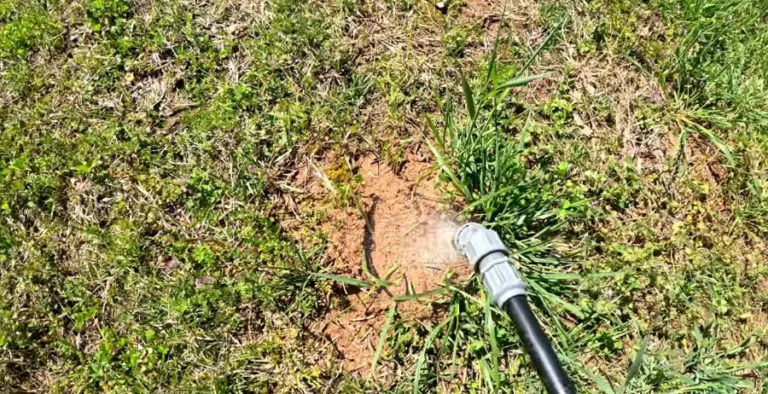
Once the coffee-can test or visual inspection confirms chinch bugs, treatment involves applying a labeled insecticide to the thatch layer where the insects live and feed.
Effective timing: Treat in the morning or evening rather than midday. High summer heat increases insecticide volatility and reduces its effectiveness on the grass surface. Water the lawn lightly before treatment to bring chinch bugs up toward the grass surface where they’ll contact the product.
Products: Insecticides labeled for chinch bugs on St. Augustine include bifenthrin, imidacloprid, and carbaryl. Apply to the affected area and the surrounding 5–10 feet of apparently healthy grass to catch populations that have not yet caused visible damage. Chinch bugs move fast and can escape a treatment zone.
Irrigation after treatment: Water lightly after application to move the product into the thatch layer, which is where chinch bugs spend most of their time. Avoid heavy irrigation immediately after treatment, which would dilute and wash the product away from the target zone.
A single application often isn’t sufficient for a large, established population. A follow-up treatment two to three weeks later ensures that nymphs that were not exposed to the initial application are controlled as they mature.
Preventing Chinch Bug Damage in Killeen TX
Healthy, well-maintained St. Augustine grass tolerates chinch bug feeding at low population densities. The conditions that amplify chinch bug damage—heat stress, inadequate water, thick thatch, excessive nitrogen—are the same conditions that weaken lawn health generally.
Water correctly. St. Augustine grass under adequate moisture stress recovers from chinch bug feeding much better than drought-stressed grass. Watering deeply two times per week during active growing conditions keeps St. Augustine hydrated through the highest-risk summer period. For timing and frequency guidance, the lawn watering schedule guide covers St. Augustine irrigation specifically.
Avoid excess nitrogen in summer. Heavy nitrogen applications during July and August produce the soft, lush shoot growth that chinch bugs prefer. Follow a spring and early summer fertilization schedule and avoid mid-summer nitrogen applications during peak chinch bug activity.
Manage thatch. Southern chinch bugs live and reproduce in the thatch layer. Lawns with thick thatch harbor larger chinch bug populations. Dethatching or aerating St. Augustine periodically reduces the habitat where populations build between seasons.
Mow at the correct height. St. Augustine mowed at 3–4 inches is healthier and more resistant to pest damage than scalped or over-mowed lawns. Correct mowing height information for St. Augustine in Killeen is in the St. Augustine grass care guide.
For a month-by-month view of when to apply preventive pest control and weed treatment alongside fertilization, the Killeen TX lawn care calendar covers each season in sequence.
Chinch Bugs and Bermudagrass
Chinch bugs are largely a St. Augustine grass problem. Bermudagrass is not significantly damaged by southern chinch bugs under normal conditions—its growth habit, drought tolerance, and different nutritional profile make it far less attractive as a feeding host. If your yard has both grass types, chinch bug pressure will be concentrated in St. Augustine sections. This is one of the reasons Bermudagrass is often the lower-maintenance choice for Killeen’s full-sun areas—a comparison covered in the St. Augustine vs Bermudagrass guide.
Frequently Asked Questions
Can chinch bugs kill an entire lawn?
In severe, untreated infestations during peak summer heat, chinch bugs can destroy large sections of St. Augustine grass. In Killeen’s July and August conditions, populations can double quickly and spread across a yard within weeks. Early identification and treatment prevents total lawn loss. Areas where the grass has already died will need re-sodding after the infestation is controlled.
How do I know if it’s chinch bugs or drought?
Water the damaged area thoroughly and observe for several days. If it’s drought stress, St. Augustine will show visible recovery within a few days of adequate irrigation. If the patches continue to brown or expand despite watering, chinch bugs are likely involved. Confirm with the coffee-can float test at the edge of the damage zone.
Do chinch bugs go away on their own?
Population levels naturally decline in September and October as temperatures drop, but the grass damage from a summer infestation doesn’t reverse on its own. Dead St. Augustine grass caused by chinch bug toxin will not regrow; those areas need re-establishment. Waiting for the pest to decline before treating means the damage expands throughout the summer.
Is there a chinch bug resistant St. Augustine variety?
Some St. Augustine varieties show improved chinch bug tolerance, including Floratam. However, Floratam is not cold-hardy enough for Killeen’s occasional hard freezes and may not be widely available locally. Standard St. Augustine varieties planted in Killeen require management rather than genetics to handle chinch bug pressure.
Can I prevent chinch bugs with routine lawn service?
Routine mowing at the correct height, consistent irrigation, and avoiding over-fertilization significantly reduce the conditions that allow chinch bug populations to build to damaging levels. Routine lawn care and weed control service visits during summer also create regular opportunities to spot early chinch bug activity before populations peak.